Projects
Click through the many projects led by the Good Neighbours Committee over our 20+ year history. You can also filter by category to organize the projects by theme.
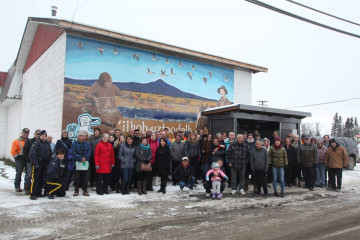
Walking Together Mural
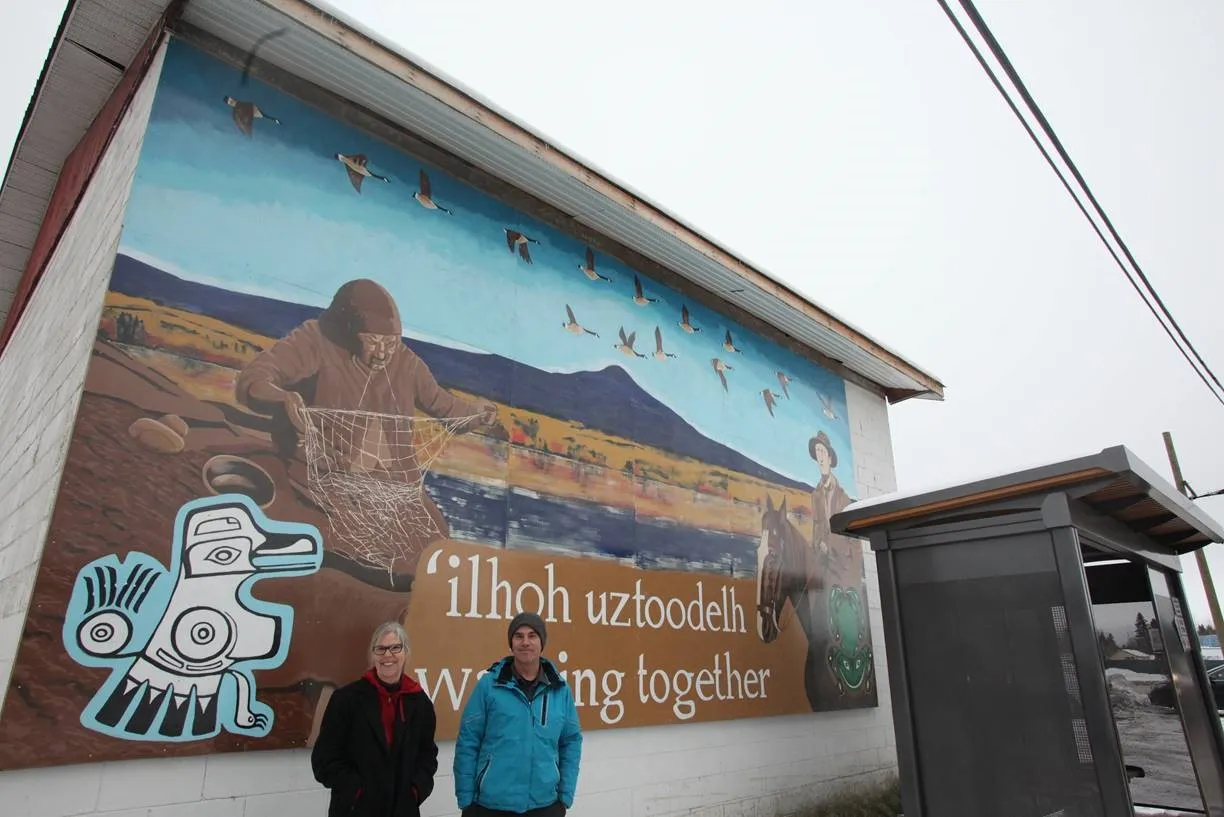
The “ilho uztoodelh – Walking Together” mural and transit shelter project (2017) was a collaborative initiative led by the Good Neighbours Committee (GNC) in partnership with the Saik’uz Elders Group, with support from the District of Vanderhoof, Four Rivers Co-op, and other community partners.
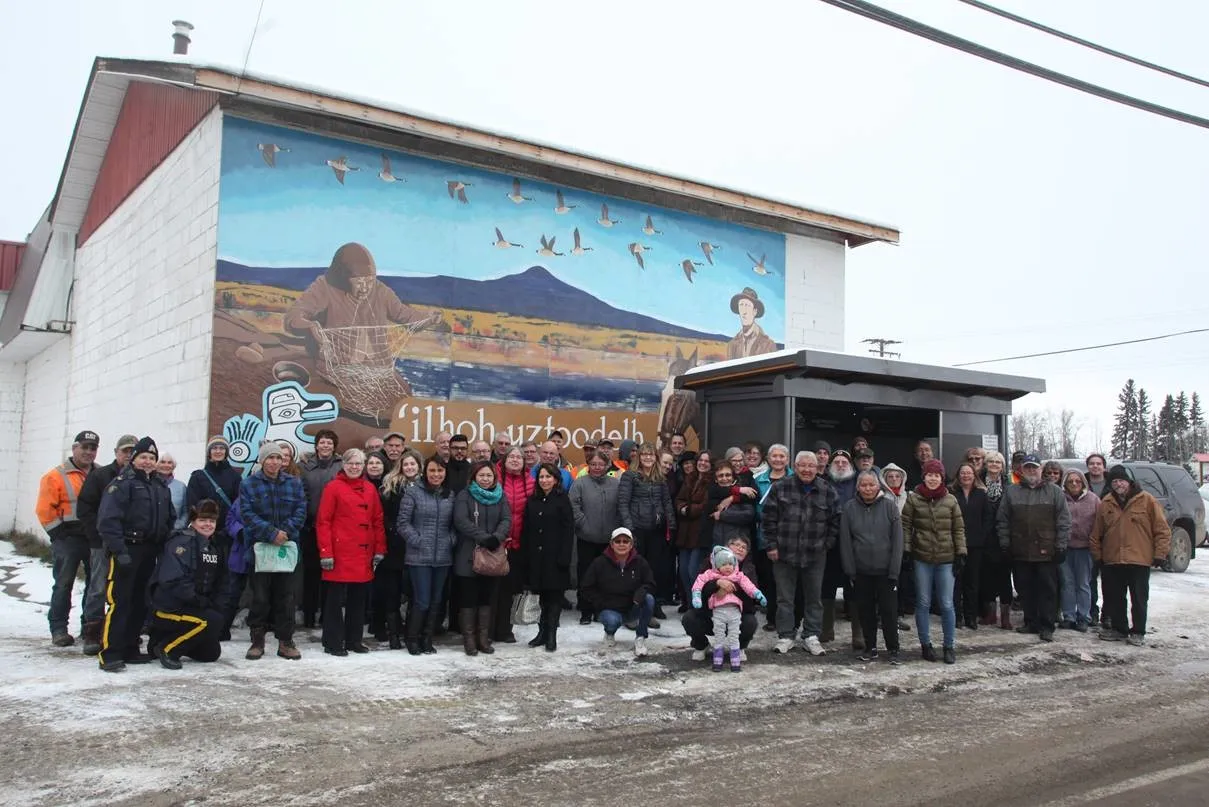
A new mural was installed in Vanderhoof and unveiled on November 14, 2017, at the corner of Highway 16 and Kenney Dam Road. Community members gathered for the unveiling ceremony, followed by refreshments at the Fire Hall, to celebrate the collaborative work that resulted in both the mural and two new transit shelters designed to protect commuters travelling between Saik’uz and Vanderhoof.
The project responded to a clear community need. The corner of Highway 16 and Nechako Avenue is a location commonly used by people waiting for rides to Saik’uz, yet previously there was no protection from the elements—sun, rain, wind, or snow—nor safe places to sit. In 2016, following the announcement of Highway 16 bus routes, the GNC began pursuing the installation of a shelter at the site. The shelter was envisioned not only as infrastructure, but as a bridge across the divide that has often separated the communities of Saik’uz and Vanderhoof.
This divide has been described in community learning spaces such as Carrier Cultural Competency workshops led by Sarah John, who speaks about the “Great Nine Mile divide” and the emotional experience of entering Vanderhoof from Saik’uz—feelings of tension, unease, and uncertainty about how one will be received. Drawing on a teaching shared by her mother, Colleen Erickson, Sarah reframes “bridging the gap” as not one bridge but many—like the twinned Simon Fraser bridges in Prince George—allowing for a greater flow of movement, relationship, and communication.
As the project developed, it expanded from a single shelter into two shelters—one at Highway 16 and Nechako Avenue, and one at Saik’uz Veteran’s Park—and eventually grew to include the mural itself. The shelters were installed in early November 2017 following collaborative planning with Saik’uz First Nation leadership, the District of Vanderhoof, the Ministry of Transportation and Infrastructure, and the RCMP.
The mural became a central artistic and cultural expression within this broader initiative. Painted by local artists Annerose Georgeson and Michael Rees, the work was developed through a community-driven design process that incorporated submitted artwork and ideas. The Saik’uz Elders envisioned a piece that would celebrate a time when settlers and Saik’uz people worked together, while also expressing values for the future—collaboration, partnership, and respect.
This vision is grounded in lived history. As recalled by former Chief Adanas Alexis, earlier generations experienced both cooperation and change as settlers arrived: sharing knowledge, helping build homes, and supporting one another, even as colonial systems increasingly restricted Indigenous access to land. These layered histories informed the intention behind the mural—to acknowledge the past while pointing toward renewed relationship.
Saik’uz Elder Arlene John reflected on the process:
“It took a long time to come up with the design, I just loved the teamwork. So much time was taken to think of the mural elements, to demonstrate what we felt, the meaning behind it… We wanted to portray the values we want to see going forward—more collaboration, more partnerships between Vanderhoof people and Saik’uz people. The bus was a partnership too. We are taking positive steps, we’ve come a long way.”
Installed on the former Kwik Save building at a highly visible gathering and transit point, the mural and shelters together function as both practical infrastructure and symbolic connection points—supporting safety while fostering visibility, dialogue, and shared space.
As of 2026, there are plans to relocate the mural to another site in Vanderhoof, extending its reach and continuing its role in fostering community connection and reflection.